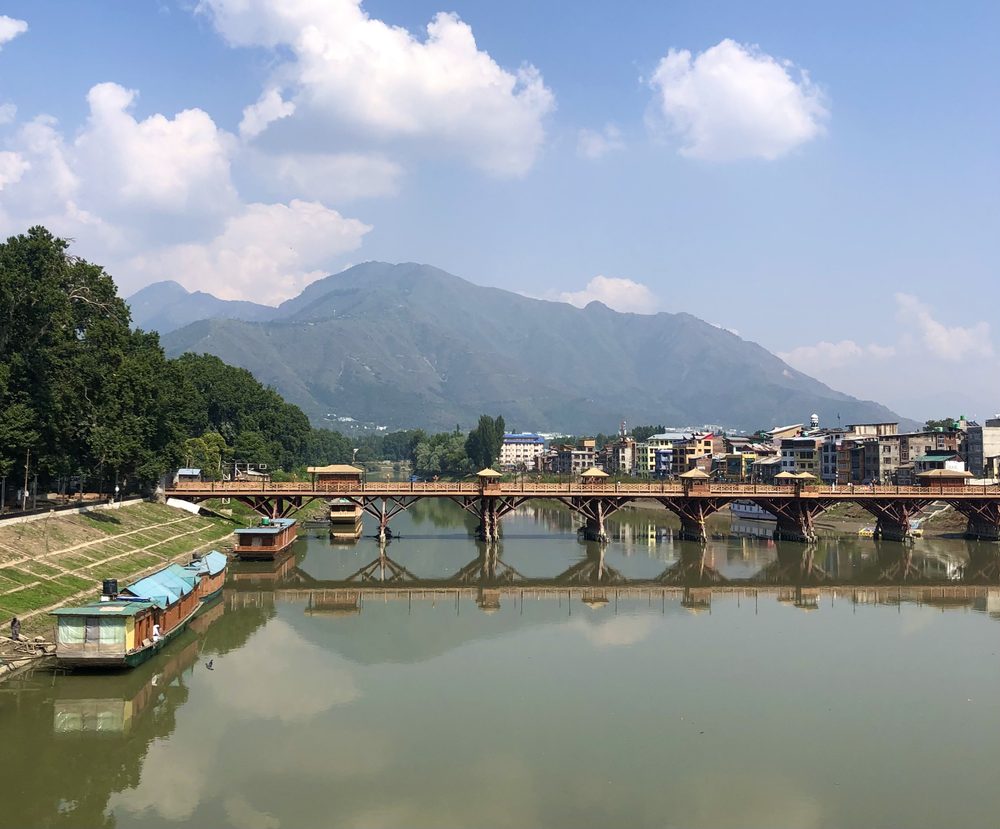
Srinagar, along the Jhelum River. Photo: Unpetitprole, CC BY-SA 4.0, via Wikimedia Commons.
In this piece
- Dal Lake pollution and near-annual flooding
- Water supply that isn't reliable, even now
- Power cuts
- Real estate prices rivaling Mumbai and Delhi
- The highest cost of living in India, on local salaries
- Unemployment and a real jobs gap
- Traffic congestion made worse by tourism itself
- Public transport that disappears at night
- Hospitals stretched far past capacity (and not enough medical college seats)
Srinagar is genuinely beautiful, and the hospitality is real, both things covered elsewhere on this site. That doesn't cancel out the actual, daily problems residents deal with, and pretending otherwise doesn't help anyone. These ten are the ones with the clearest, most current documentation.
Dal Lake pollution and near-annual flooding
Contrary to what generic "IMD monsoon average" figures for India suggest, Srinagar's real wettest months are spring, not the summer monsoon: March and April average around 95mm each, driven by western disturbances, not the monsoon. The Pir Panjal range blocks much of the summer monsoon that soaks the rest of India, so June-August average only 45-50mm each, closer to a moderate month than a deluge. That doesn't make flooding rare, though: urban flooding after just a few hours of intense rain has become close to an annual feature of the city, since flash floods are driven by short, intense cloudbursts, not monthly averages. August 2025 saw a real flood emergency across Jammu & Kashmir, including a deadly cloudburst in Kishtwar. An RTI response has separately flagged multiple hospitals, schools, and bridges in Srinagar as structurally vulnerable to flood damage, including a roughly 70-year-old hospital building rated "deteriorated." On top of the flood risk, Dal Lake itself is shrinking under untreated sewage, encroachment, and pollution, not just an environmental abstraction: nearly 6,000 waterborne disease cases were recorded in Srinagar between June 2025 and June 2026 alone.
Water supply that isn't reliable, even now

Tap water, illustrative. Photo: Alex Anlicker, CC BY-SA 3.0, via Wikimedia Commons.
Water supply disruptions in Srinagar aren't rare or historical, they're recurring through 2026: 24-hour and even 48-hour supply suspensions have hit multiple localities this year alone, sometimes for urgent repair work, sometimes for reasons residents describe as chronic. Part of the underlying problem is structural: the city has no separate infrastructure for drinking water versus irrigation, both draw from the same potable supply network, and an estimated 40% of that supply goes to unpaid lawn and garden irrigation rather than household use.
Power cuts
Electricity meters, illustrative (not photographed in Kashmir). Photo: Balaji Kasirajan, CC BY-SA 3.0, via Wikimedia Commons.
Electrical feeder shutdowns and supply disruptions continue to affect parts of Srinagar and surrounding areas, on top of the seasonal load-shedding Kashmir has long dealt with in winter, when demand for heating spikes and supply doesn't keep pace.
Real estate prices rivaling Mumbai and Delhi
Housing along the Jhelum River, Srinagar. Photo: Unpetitprole, CC BY-SA 4.0, via Wikimedia Commons.
Land prices in Srinagar have climbed to levels normally associated with India's largest metros. Prime localities like Gupkar, Sonwar, Lal Chowk, and Karan Nagar are pricing residential plots around ₹3 crore per kanal (roughly a fifth of an acre), with commercial properties running even higher. The twist: the city is hemmed in by the same hill-station land constraints as anywhere else, so despite sky-high asking prices, there are reportedly few actual buyers at these rates, a genuine affordability crisis for anyone trying to buy locally.
The highest cost of living in India, on local salaries
Indian currency, illustrative. Photo: Pdpics, note design courtesy Reserve Bank of India, CC BY-SA 3.0, via Wikimedia Commons.
Jammu & Kashmir has been reported to have the highest cost of living in India, and the gap between local salaries and that cost is stark: one cost-of-living estimate put the median after-tax salary in Srinagar as covering roughly 0.7 months of average living expenses. Food inflation has compounded this, wholesale price inflation hit 9.87% in June 2026, and staples have hit records: mutton around ₹700/kg, peas ₹180/kg, tomatoes ₹80/kg.
Unemployment and a real jobs gap
Rising unemployment and a lack of livelihood opportunities are consistently raised by residents and local political leaders as one of the city's core, unresolved problems, described repeatedly in local reporting as a "development deficit" that successive governments haven't closed.
Traffic congestion made worse by tourism itself
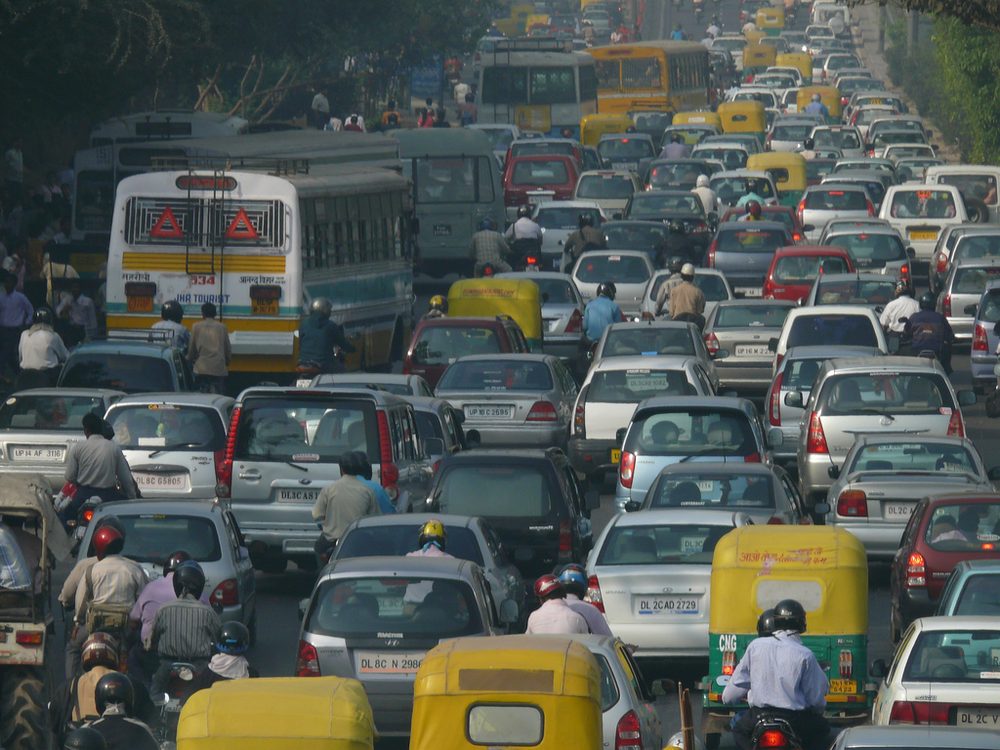
Traffic congestion, illustrative (Delhi, not Srinagar). Photo: NOMAD, CC BY 2.0, via Wikimedia Commons.
Srinagar's traffic has become a daily grind, and tourism is a direct contributor: by June 2026, Regional Transport Office data showed 83,000 non-local vehicles had entered the city that year, on top of local vehicle sales growing over 36% (passenger vehicles over 60%) year-on-year. Srinagar's own traffic police leadership has said the department doesn't have the manpower to manage it. There's a real, uncomfortable irony here: a site like this one exists partly because of tourism, and tourism is part of what's straining the city it's promoting.
Public transport that disappears at night
Buses, minibuses, and shared cabs largely vanish from major Srinagar routes after sunset, leaving office workers, students, patients, and daily-wage workers stranded, especially between 6-9pm. The newer Smart City e-bus fleet (98 buses as of 2026) has genuinely helped, but coverage is limited, some routes only extend partway into outlying localities, and overcrowding on the buses that do run has become its own safety concern, with female commuters specifically raising it in local reporting. The public transport system not being reliable in the first place is a big part of why so many residents lean on private cars for daily commuting, which feeds directly back into the traffic congestion problem above: unreliable buses push more people into cars, and more cars make the roads those same buses need to run on even more congested.
Hospitals stretched far past capacity
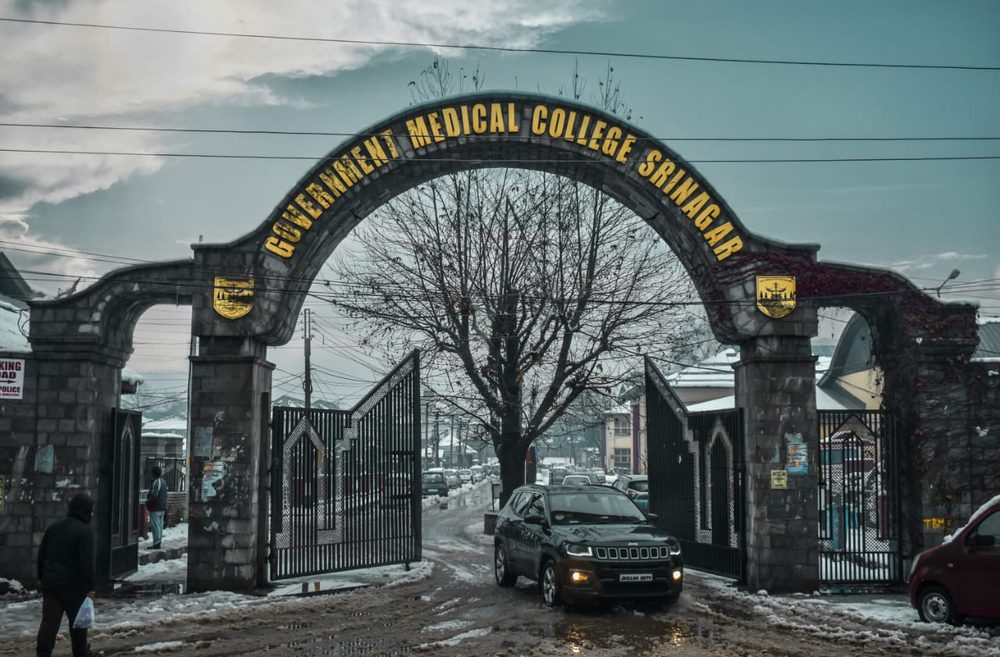
Government Medical College, Srinagar. Photo: CASS UNION, CC BY-SA 4.0, via Wikimedia Commons.
SMHS, one of Srinagar's major hospitals, sees around 3,500 patients a day across casualty, OPD, and inpatient care. At SKIMS, the region's premier medical institution, patient load keeps climbing while the facility deals with a real staffing shortfall, 275 medical officer vacancies and 582 non-gazetted staff vacancies reported. Healthcare workers describe a single doctor sometimes examining over a hundred patients in one day, since people from nearly every district in Kashmir rely on Srinagar's hospitals for advanced care, not just the city's own residents. Part of why the pipeline of new doctors can't keep pace: all of Jammu & Kashmir has just 1,875 MBBS seats spread across 12 medical colleges, for the entire union territory. GMC Srinagar, one of the two largest institutions, is reported to already be operating at full capacity, raising real doubts about absorbing planned seat expansions without serious infrastructure upgrades, on top of chronic faculty recruitment shortfalls at GMC Srinagar and GMC Jammu alike.
Here for the food and travel side instead?
Browse the SrinagarEats Restaurant Guide →Sources
Water supply: Kashmir Life, Kashmir Reader, Kashmir Observer, Gadyal News Kashmir. Housing/real estate: The Print, IJRASET. Cost of living/food inflation: Greater Kashmir, Kashmir Observer, livingcost.org, Expatistan. Unemployment/development deficit: Greater Kashmir. Traffic: Kashmir Life, Greater Kashmir, Kashmir Vision. Public transport: Greater Kashmir, Rising Kashmir, Kashmir Life, Down To Earth. Hospitals: The Tribune, Rising Kashmir, Morning Kashmir. Medical colleges: Kashmir Life, official seat-matrix listings. Dal Lake/flooding: Scroll.in, Greater Kashmir, The Kashmir Images, ETV Bharat, Down To Earth. Monthly precipitation chart: NOAA GHCN-Daily station data (station IN008010200, Srinagar), queried directly via Google BigQuery's public dataset, 2010-2023 average.