In this guide
None of this means Srinagar is unsafe or that you should be suspicious of everyone you meet. The city, including downtown, the old city around the numbered Kadal bridges, is genuinely safe to walk through, and it's where a lot of Srinagar's real character lives: narrow lanes, old wooden shopfronts, and some of the most traditional food in the city. It doesn't deserve the wary reputation outside narratives sometimes give it. Most shikara operators, houseboat owners, and shopkeepers you'll actually meet are straightforward, and Kashmiri hospitality is widely considered among the best in India for a reason. The issue is a handful of well-documented patterns, common enough that the state's own tourism department has stepped in with official rate notifications for some of them. Knowing the pattern in advance is the entire fix.
Shikara ride overcharging
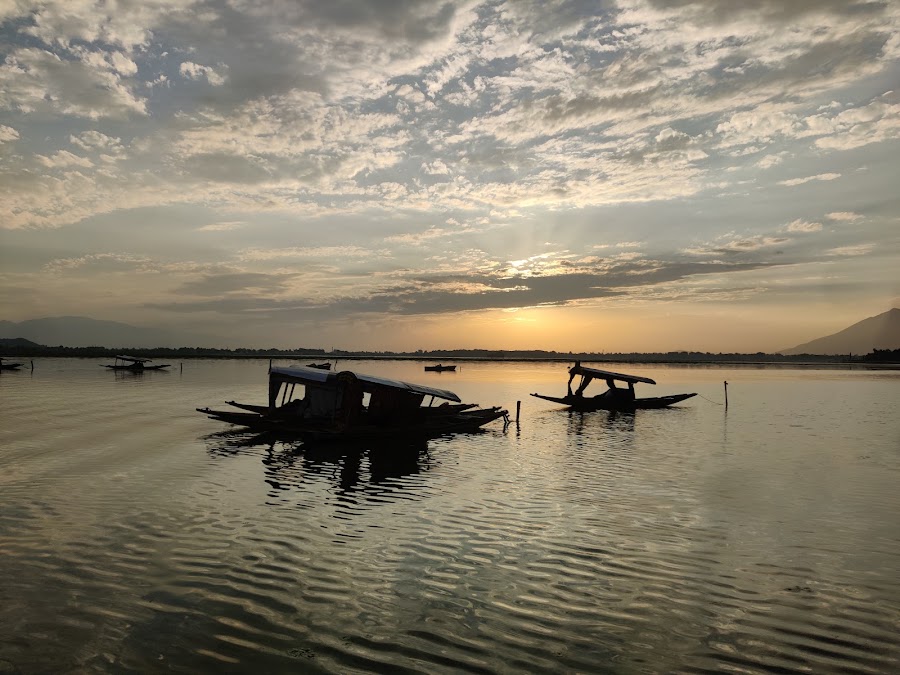
A shikara ride on Dal Lake at sunset.
Dal Lake shikaras have an official notified rate: roughly ₹700 for the first hour (about 3km), and ₹400 for each additional hour. In practice, tourists are routinely quoted well above that, especially for sunset rides or the dawn floating-market trip, where the boat fare (not the market itself) is the part that gets inflated. A common tactic is agreeing a price, then extending the route with "just one more spot" and asking for more at the end. Roaming photographer-boats are a separate, smaller thing: they'll offer to take your photo in traditional dress, mid-ride. Real visitor advice on this one: don't pay in advance, pay after you have the photos.
Includes multiple independent reviews describing the exact stop-and-upsell pattern above. Most reviews are positive; this is a real but minority pattern, not the norm.
Houseboat overcharging and booking bait-and-switch
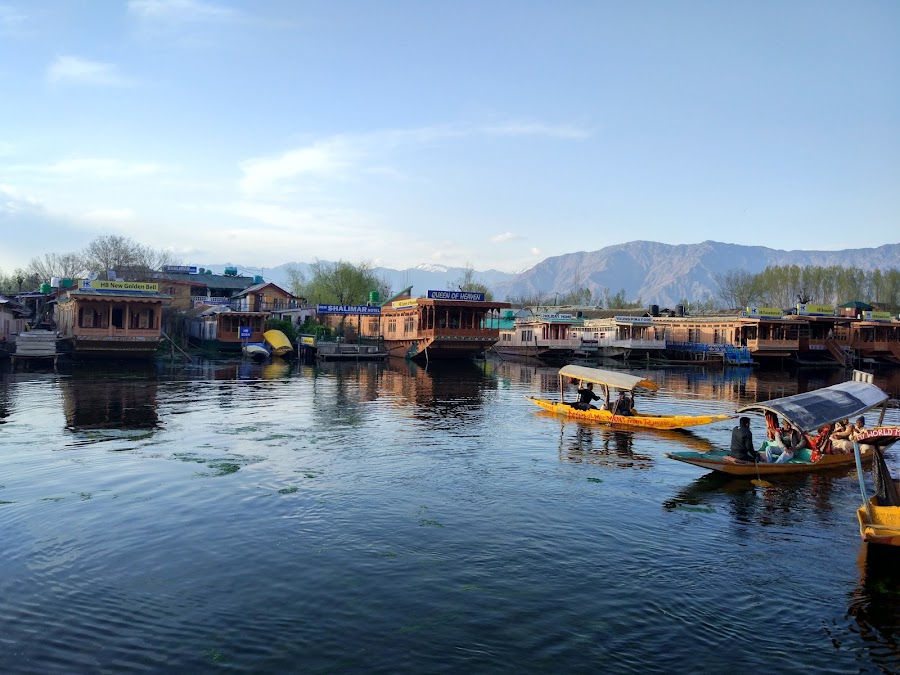
Houseboats moored on Dal Lake.
Two separate issues here. First, straightforward peak-season overcharging on nightly rates. Second, a booking pattern reported repeatedly by visitors: an agent (often outside Kashmir, sometimes claiming to be an official tourism office) promises a specific, high-end houseboat, takes payment upfront, and on arrival the guest is placed on a different, lower-tier boat with no lake view.
Includes a review describing exactly the advance-payment-then-ignored booking pattern above. Lower than the shikara rate, and the large majority of houseboat reviews are genuinely positive.
Unmetered taxis and autos
Most taxis and autos in Srinagar don't run on meters, so the fare is whatever gets negotiated at the curb. Without a local reference point, tourists routinely pay well above what a resident would for the same ride.
Shopping-commission steering
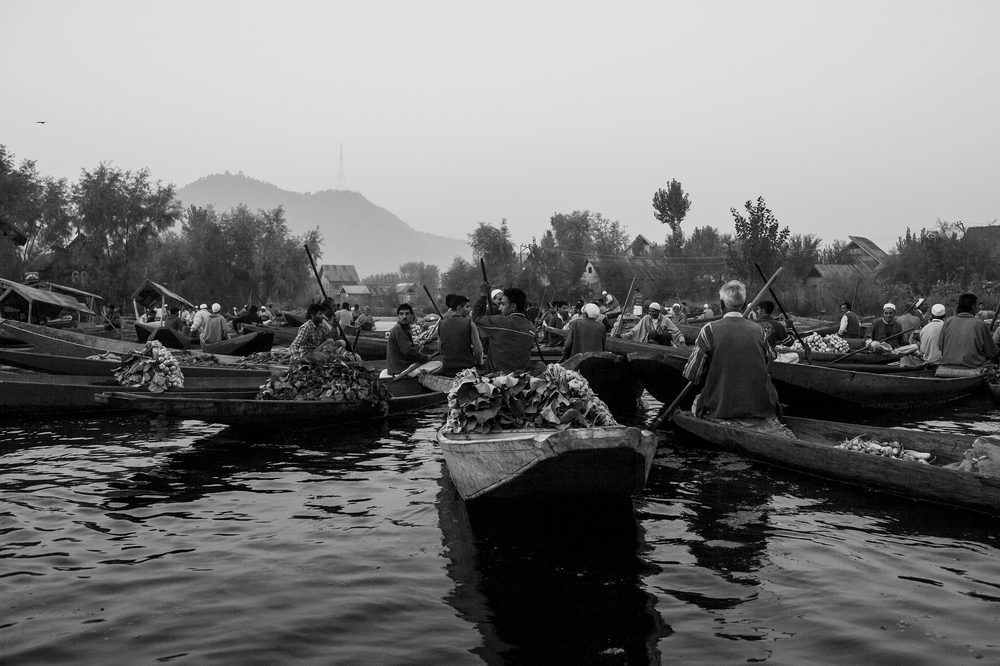
Srinagar's floating vegetable market on Dal Lake, active for about an hour and a half each dawn. Photo: KennyOMG, CC BY-SA 4.0, via Wikimedia Commons.
Shikara operators, houseboat hosts, and drivers sometimes route guests to specific shawl, carpet, or dry-fruit shops mid-ride, mid-stay, or mid-drive, because they earn a commission on anything sold. Once inside, the sales pitch tends to be persistent and emotionally framed ("this is my brother's shop," "just look, no pressure to buy"), and prices are set with the commission already built in. One real, specific review we found while pulling shop data put a number on it: a driver commission of around 50% of the sale price on dry fruits and saffron, which explains why some shop prices run two to three times higher than the same product elsewhere. Worth contrasting with the floating market above: that's real farmers selling real produce to each other at dawn, not a tourist-facing setup, and it's one of the few Dal Lake experiences with nothing to upsell.
Fake or diluted pashmina
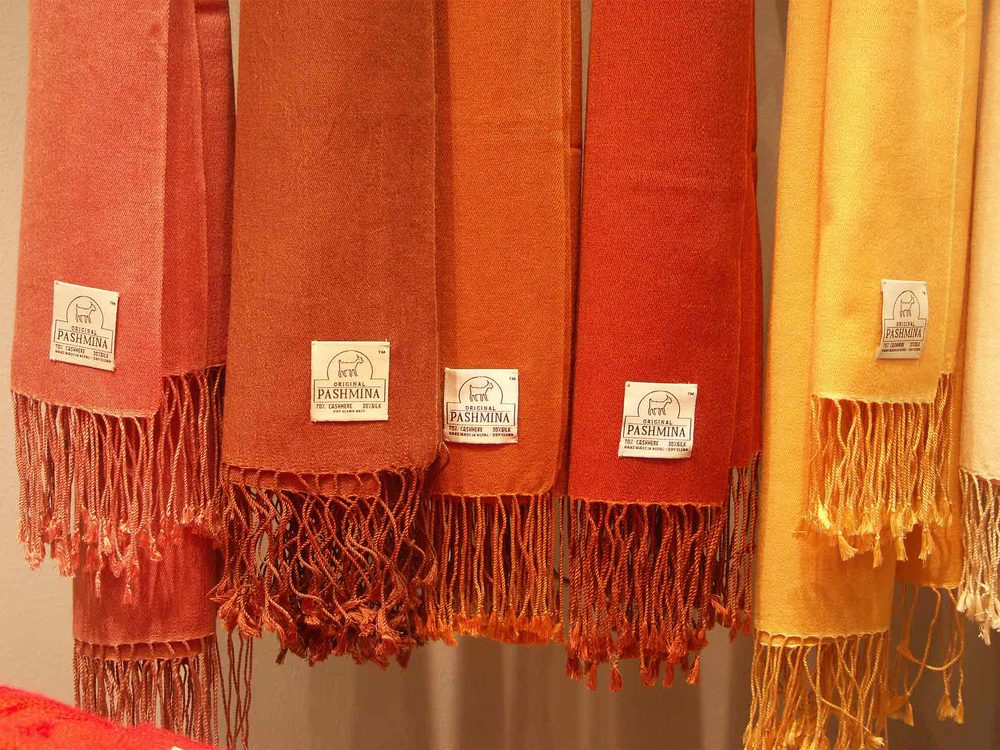
Pashmina shawls, illustrative (not photographed in Kashmir). Photo: Bettenburg, public domain, via Wikimedia Commons.
Genuine pashmina, hand-spun from the undercoat of the Changthangi goat, is expensive: a real pure pashmina shawl typically runs well into six figures in rupees. Most "pashmina" sold to tourists at tourist-friendly prices is either regular wool, a wool-pashmina blend, or machine-loomed rather than hand-woven, none of which is what's being advertised.
Includes multiple reviews describing exactly this: fake or polyester-mixed "pashmina," and one review explicitly warning about driver commissions steering buyers to a specific shop.
Fake or adulterated saffron and honey
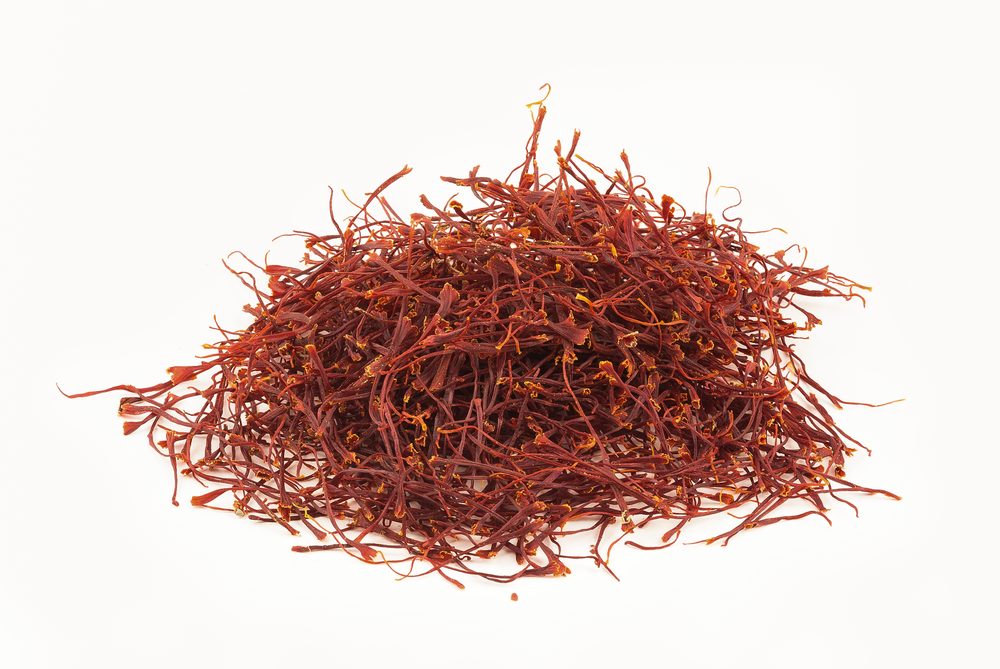
Genuine saffron threads: deep red with orange trumpet-shaped tips. Photo: Hubertl, CC BY-SA 4.0, via Wikimedia Commons.
Kashmiri saffron is genuinely one of the best in the world and genuinely expensive, which is exactly why it gets faked or cut with other threads (dyed corn silk, safflower, even dyed grass) and sold at tourist-shop prices as pure.
- Taste test: real saffron tastes distinctly bitter (from a compound called picrocrocin), never sweet. If it has no flavor or a metallic taste, be suspicious.
- Water test: drop a few strands into warm water or milk. Real saffron releases color slowly, turning the liquid golden-yellow over something like 15-60 minutes. Fake saffron bleeds color almost immediately, often a deep red, and can fall apart.
- Thread test: after soaking, rub a strand between your fingers. Real threads hold together; fakes disintegrate.
- Appearance: genuine strands are deep red with a slightly orange, trumpet-shaped tip. Be wary of saffron that looks uniformly bright red or orange throughout, or that's priced far below what real saffron should cost for the quantity.
The highest rate of the four categories we checked. Several reviews independently mention driver-commission steering, substandard or mislabeled goods, and one government-run emporium review noting a billing issue, worth knowing even certified sources aren't flawless.
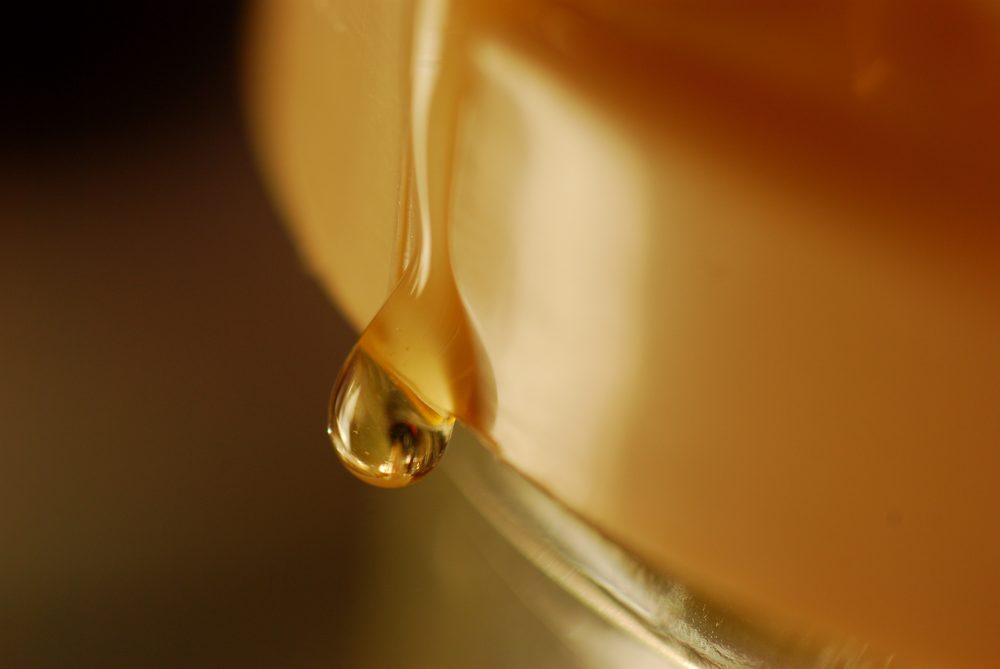
Honey, illustrative. Photo: Dino Giordano, CC BY 2.0, via Wikimedia Commons.
The same pattern shows up with honey. Kashmiri honey is genuinely good, gathered from apiaries near the valley's meadows and orchards, and that reputation is exactly why it gets faked too. This isn't just a tourist-pricing issue, it's a genuine food-safety one: Srinagar's Food Safety Department has repeatedly raided and shut down operations making fake honey from boiled, coloured sugar syrup and packaging it as pure, home-made Kashmiri honey, sold to tourists and locals alike by roadside vendors rather than any established shop.
Looking for where to actually eat well in Srinagar, backed by real data instead of guesswork?
Browse the SrinagarEats Restaurant Guide →Sources
Shikara rate figures from J&K Tourism Department notifications as reported by Greater Kashmir. Saffron authenticity tests compiled from multiple saffron-industry and food-authentication sources. Houseboat and shopping-commission patterns compiled from repeated, independently reported visitor accounts rather than any single source, and deliberately described here by pattern rather than by naming any specific business. Fake honey enforcement reported by Greater Kashmir, Rising Kashmir, and Kashmir Observer. The Zero-Ticket Travel Initiative and red Smart City e-buses are reported by Greater Kashmir and Tribune India. The Chalo app integration is reported by The Kashmir Monitor and Brighter Kashmir. Cab app details verified against each provider's official site and app store listing. The "real data check" figures come from pulling real listings and their public Google reviews via the Google Places API (56 shikara/boat-tour listings and 267 reviews; 60 houseboat listings and 297 reviews; 87 pashmina/shawl shop listings and 395 reviews; 68 saffron/dry-fruit shop listings and 330 reviews, the maximum of 5 reviews per listing the API allows), then scanning the review text for overcharging, fake-product, and scam-related keywords. It's a real, repeatable measurement, not a survey, and no individual business is named based on it.